The Snail-Crunching Australian Marsupial
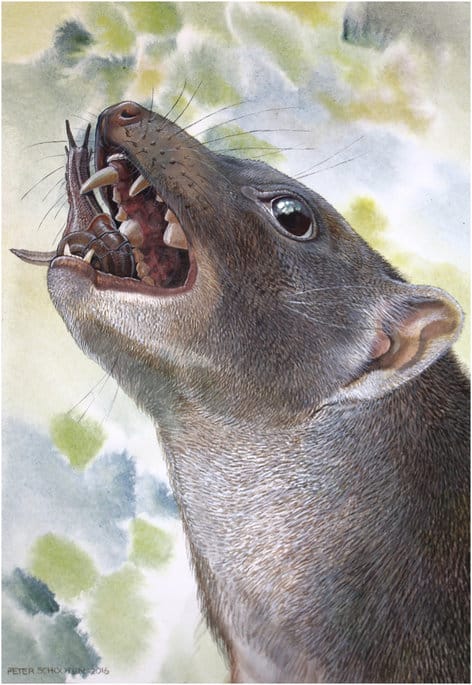
In May (2016), a study was published describing a new marsupial from Australia with an interesting set of teeth. Let’s dive right in.
Firstly, what is a marsupial? A marsupial is a type of mammal that has a pouch. When a marsupial baby is born, it crawls into the mother’s pouch to continue growing before it’s ready to live in the world.
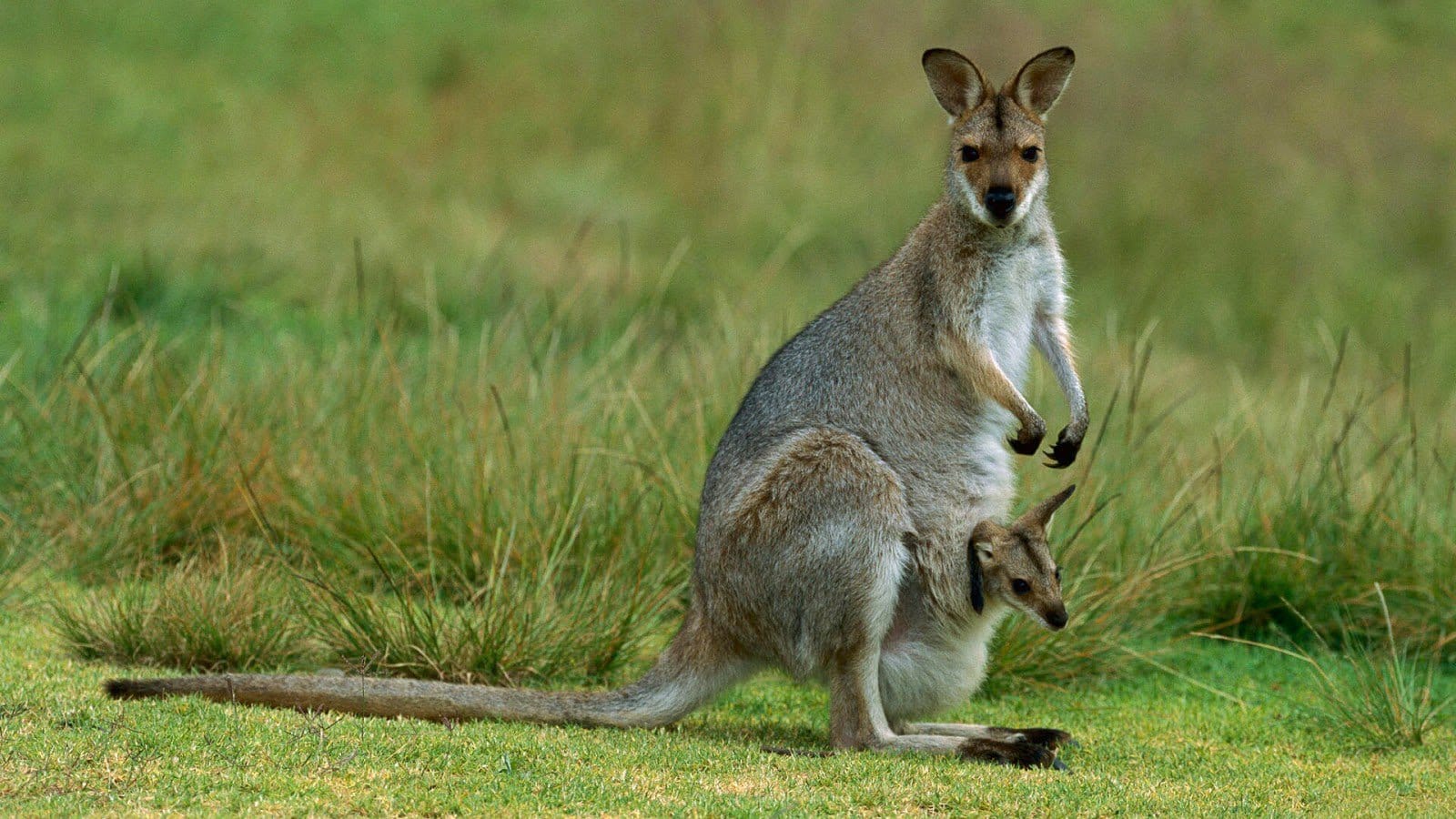
When most mammals are born, they are instead born directly into the world, and their parents care for them until they are ready to live on their own. This type of mammal is called placental, and humans belong to this group. A few mammals still lay eggs, but that’s a story for another day.
Marsupials live in the Americas and Australia and come in a variety of shapes and sizes. Interestingly, marsupial and placental mammals seem to mirror each other in environments, diets, and lifestyles. There are burrowers, fast movers, tree dwellers, large herbivores, and carnivores in both groups. There were even marsupial lions and wolves (see video at the bottom). This is an example of convergent evolution, where animals independently evolve similar characteristics.
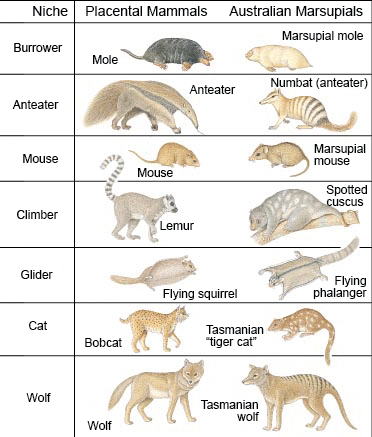
Even more interestingly, there are no aquatic or flying marsupials (so nothing like a marsupial whale or bat), because having a pouch makes those environments difficult to live in.
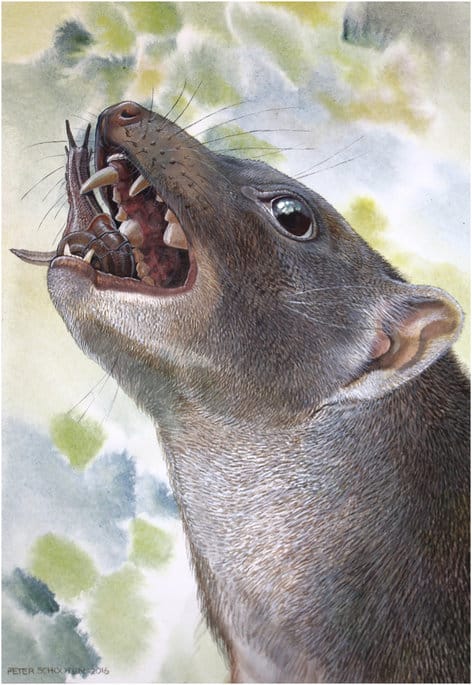
Now that we know what a marsupial is, we can talk about the new one. The fossil, Malleodectes mirabilis (meaning “hammer-tooth”), was found in northwestern Queensland, Australia, in rocks of Miocene age (around 14.6 million years old). It is a left maxilla (the bone that holds teeth in the upper jaw), and it preserves several teeth, including one that had not yet erupted.
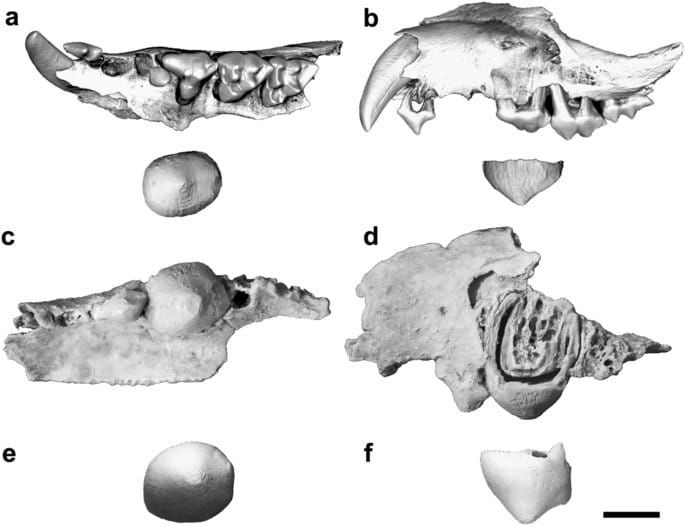
Teeth are especially important in mammal paleontology because each species has its own distinctive set of cusps and shapes, allowing scientists to identify species from individual teeth. This fossil has a tooth still in the jaw that is cone-shaped, with a wide base and a small point—similar to teeth found in animals that eat snails. The shapes of the other teeth indicate that this animal could eat other types of food as well.
This combination of tooth types tells us that Malleodectes was likely the only mammal able to take advantage of this particular variety of diet in Australia’s Miocene rainforests, making it completely unique.
And check out this video of a Thylacine, the Tasmanian Wolf, also known as the Tasmanian Tiger.

Comments ()