

NASA and the Lower Cretaceous

The National Aeronautics and Space Administration (NASA) usually has their eyes on the sky, but this week a papercame out describing a fossil found at their Maryland Space Flight Center.
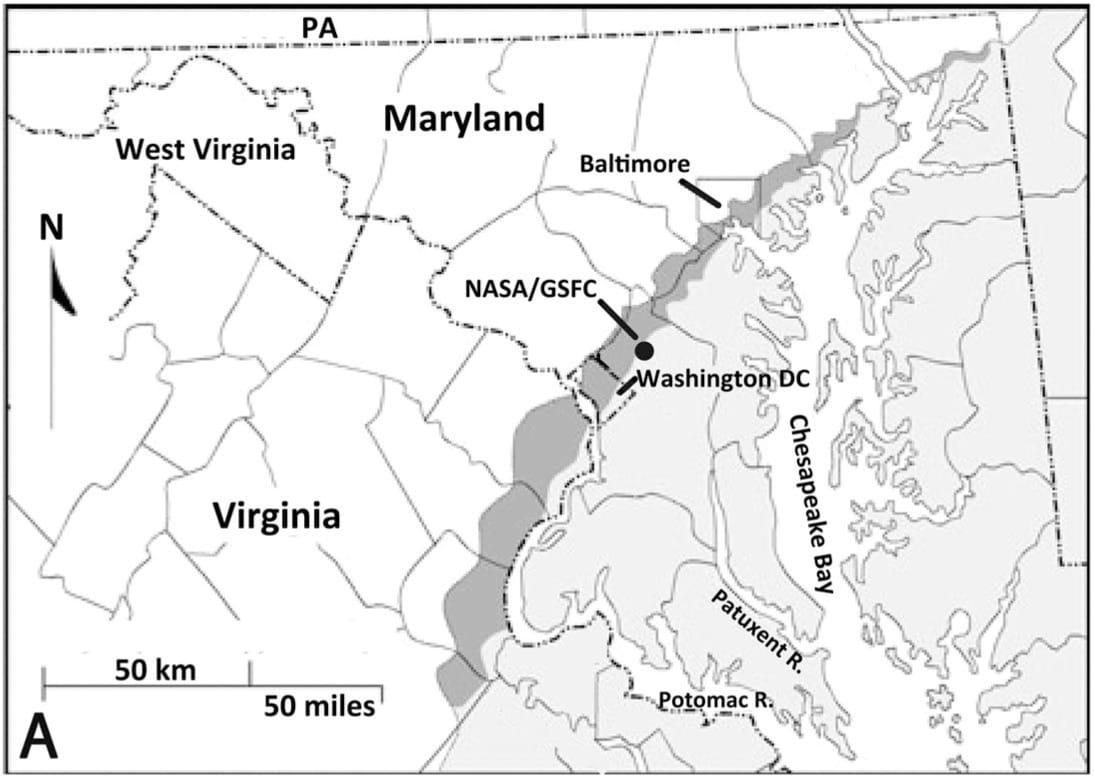
Ray Stanford was dropping off his wife, Sheila, back at NASA after having lunch together when Ray spotted an interesting rock. As an amateur paleontologist, Ray went to investigate. He noticed that the rock had a 12-inch-long footprint preserved on it and called on a few professionals to help excavate it. That was back in 2012, and this week the paper describing this fossil was published.
The rock slab is 8 feet (almost 2.5 meters) long and 3 feet (almost 1 meter) wide and shows almost 70 tracks of different animals. The rock is from the Lower Cretaceous (142–96 million years ago) and preserves footprints from theropod, ankylosaurian, and sauropod dinosaurs, as well as pterosaurs.
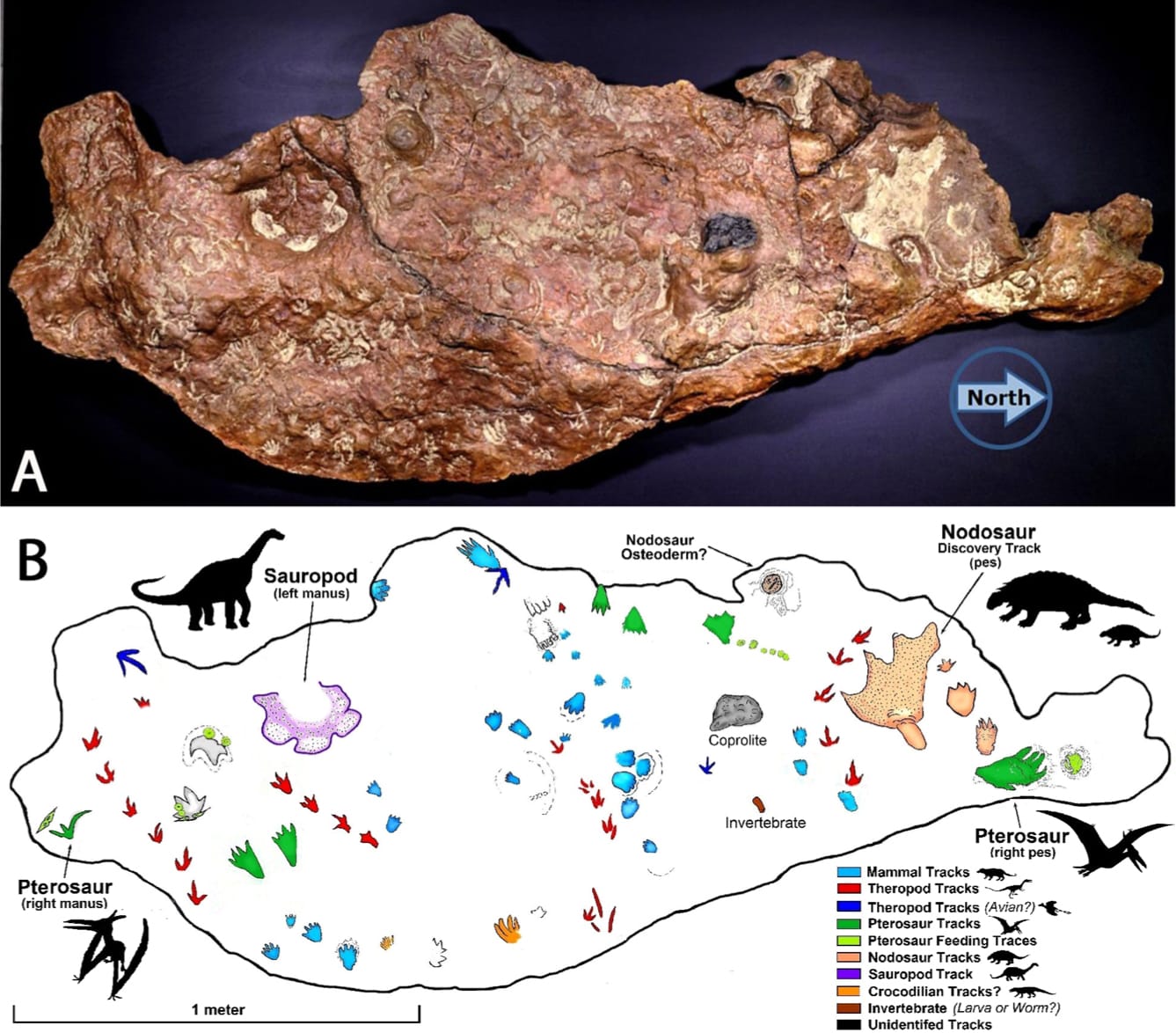
But the real stars of this slab are the mammal tracks. Cretaceous mammal tracks are extremely rare, and this slab seems to preserve 26 tracks made by mammals. That’s an incredible number.
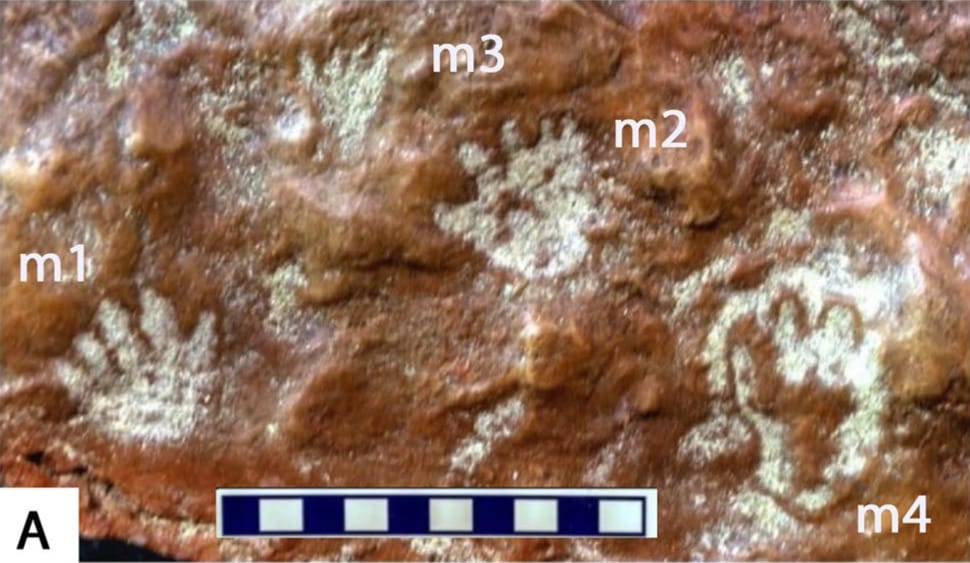
Without any body fossils, it is hard to pinpoint exactly what species made these tracks, but further studies and new discoveries could eventually help clarify this. What this slab does show is that Maryland had a very diverse set of animals living there at the beginning of the Cretaceous.


Comments ()