Lucy’s Sudden Fall
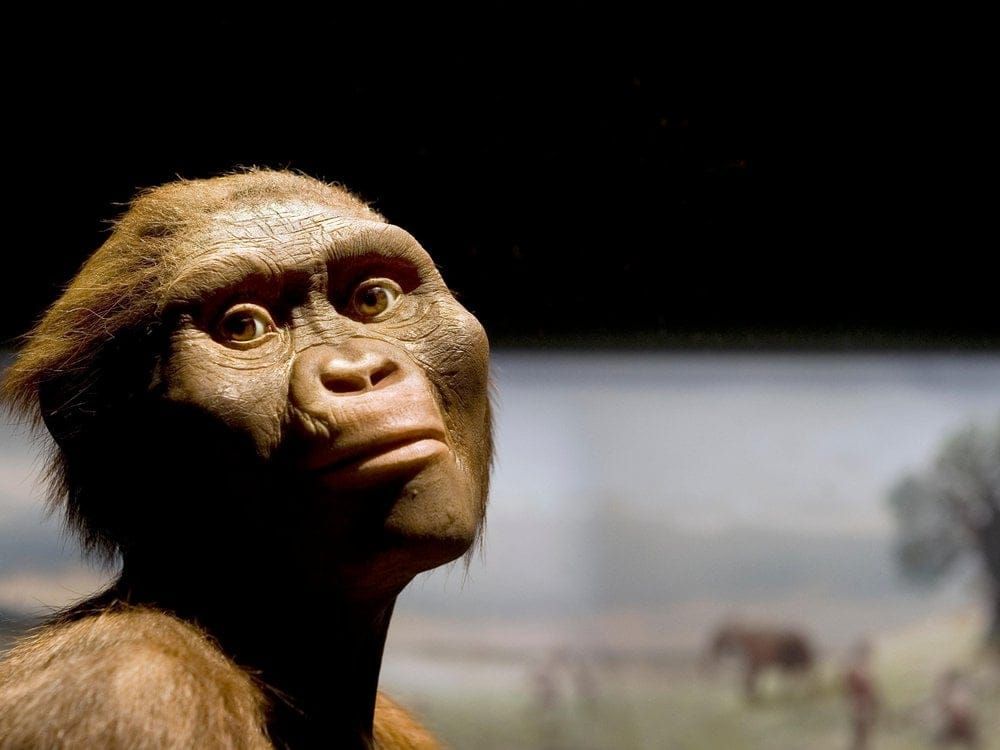
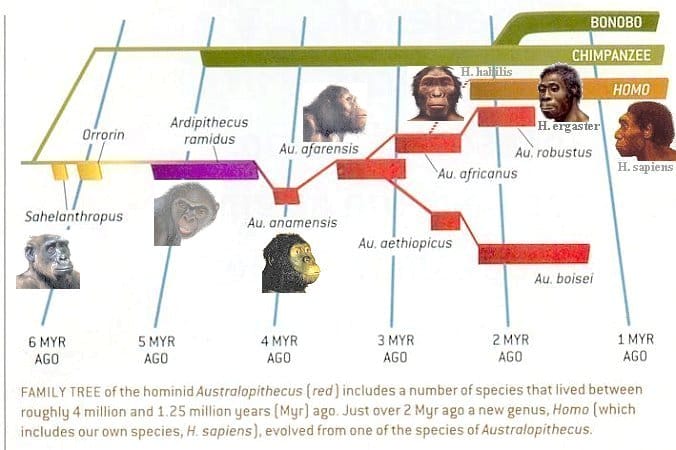
This week, an article was published that examined the remains of Lucy. You may know of Lucy – she is a specimen of the hominoid species Australopithecus afarensis. This species is a relative of modern humans that lived around 3.2 million years ago. She was found in 1974 and is relatively complete, making her very valuable and rare.
Lucy is usually housed in Ethiopia, but was recently traveling the US. While in Texas, she was CT scanned by the University of Texas at Austin CT facility. CT scanning allows 3-dimensional models to be made of the fossil, so that more studies can be done on the same specimen without worrying about breaking the original fossil.
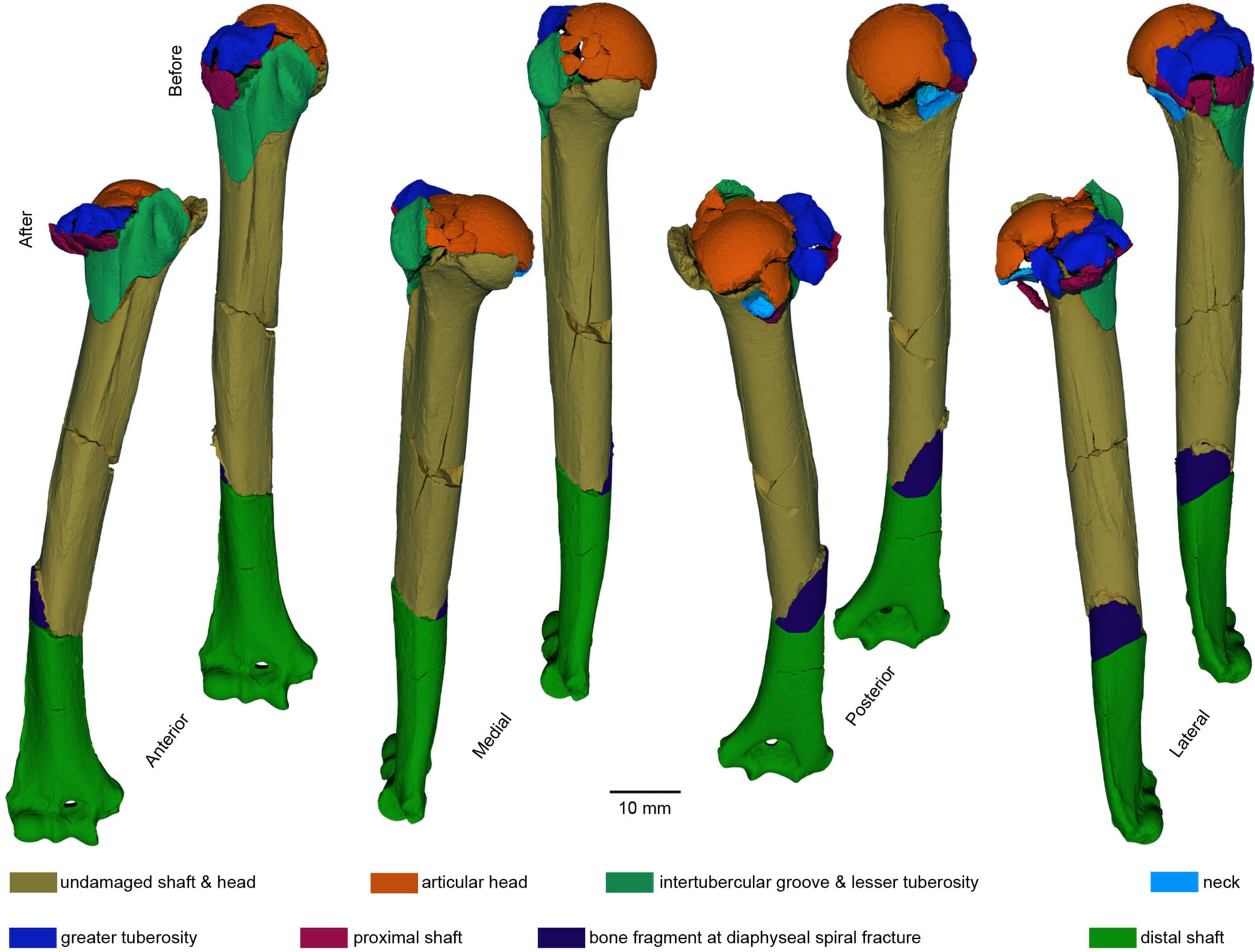
The CT scans show multiple bone breaks in both humeri (the upper arm bones), the femur (upper leg bone), ribs, hips, and skull. The types of breaks she has are consistent with what doctors see in patients that have fallen from a great height. Even more striking is that some of the breaks show that Lucy stretched her arms out while she was falling to try to protect herself. The bone breaks tell us that the height she fell from was too great and that her organs would have been injured as well. Lucy likely died from these injuries. Modern medicine and scientific methods were able to come together to help reconstruct her story.

Comments ()