Back from the Field (Part 2)
This week I’m continuing stories about my trip to Utah with the Burpee Museum, because it was so much fun it deserves two posts. Today I’m focusing on the other part of field work: prospecting! I’ll also list some animals we saw and share a few photos.
First: prospecting. Prospecting is when we go to a new area with exposed rocks of the right age and search for fossils. We know where to look because of geologic maps or satellite images. The process is simple: we drive (or hike) to the area and then spend a couple of hours walking up and down the rocks, scanning the ground for anything that might be bone.
[VIDEO 2016-06 IMG_7707.mp4]
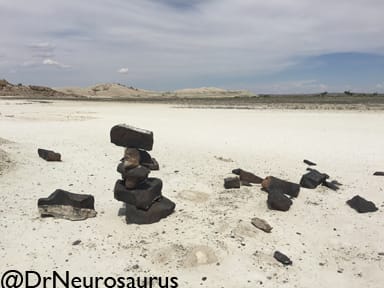
Sometimes we’re lucky. Sometimes we aren’t. Sometimes we find bone, but it’s modern (like in the video), so we put it back. For these hikes, it’s important to carry plenty of water and a snack if you’re like me and get hungry often. It’s also good to take breaks and enjoy the view—or build a cairn (a balanced rock stack) just for fun.
If we had found something significant, we would use tools to determine how large the fossil was. If it was small, we could remove it and wrap it in toilet paper for protection. If it was too big, we would mark it and decide whether there was time to pedestal and jacket it (like I described in the last post). Prospecting is exciting because you never know what you might find while surrounded by spectacular scenery.
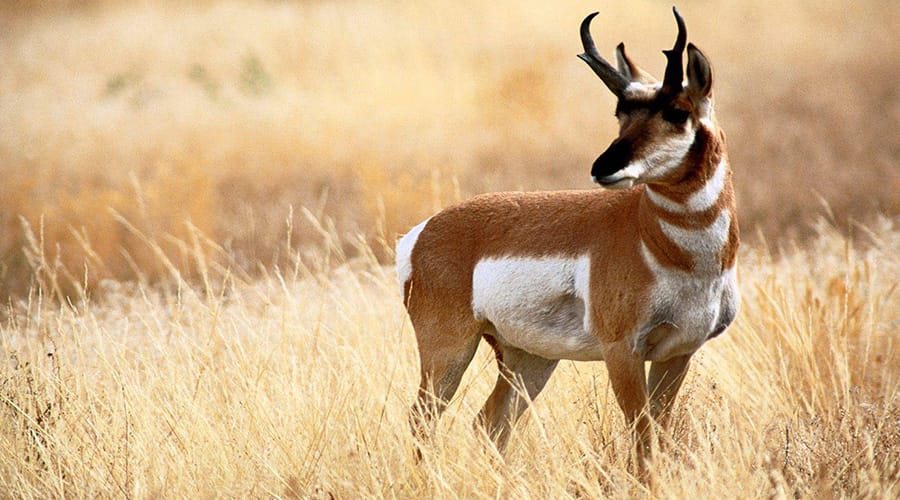
Second: animals! We saw quite a few during our trip. On the first day we saw a herd of pronghorn antelope. I only managed a few blurry photos, so here’s a clearer one:
We also saw a rattlesnake, which we carefully escorted off the road so it wouldn’t get run over.
[VIDEO 2016-06 IMG_7688.mp4]
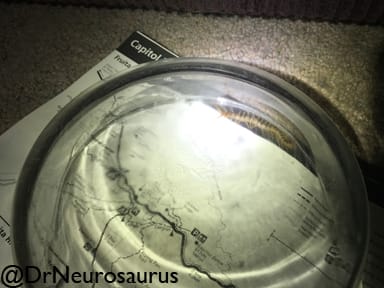
At night we saw kangaroo mice and bats, though I couldn’t get photos of them. At basecamp we had some visitors too—an 8-inch-long centipede that we captured and released outside.
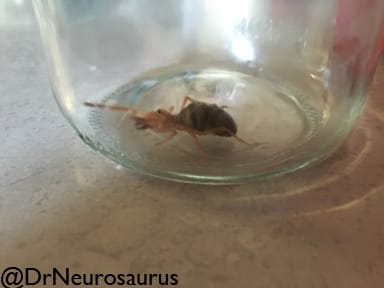
We also found what was later identified as a sun spider (or solifugid), a carnivorous arachnid that feeds on insects and other small animals. It looks intimidating but is usually harmless to humans. It was also escorted outside.
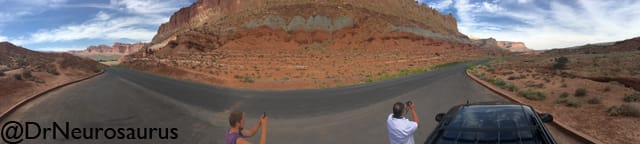
Lastly: rocks. On our final day we visited
Capitol Reef National Park and saw beautiful rock exposures.
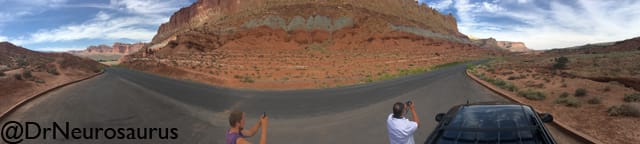
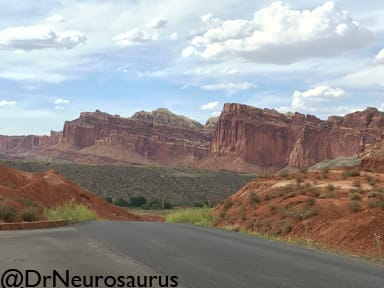
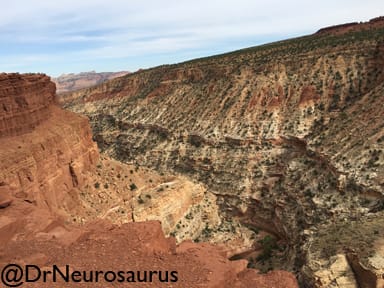
It’s easy to forget the planet can look like this when you live in the suburbs. I gained valuable field experience on this trip and won’t soon forget the adventures I had in Utah. The best part is that you can participate too. The Hanksville Burpee Dinosaur Quarry offers tours while the site is open and is always looking for volunteers to help dig. See here for details. You can also look for opportunities through local natural history museums or universities. It’s a big planet—go out and explore.

Comments ()